Interactive Webinar Series for a More Circular Europe
As part of EU Circularity Month, a Europe-wide initiative highlighting innovative approaches to sustainable growth, the GENESIS Project is launching an interactive online webinar series dedicated to accelerating the transition towards a circular economy across European regions.
Taking place throughout March 2026, this series will bring together stakeholders from across the EU to explore practical, scalable solutions that support greener industrial systems, resilient value chains, and interregional cooperation.
Why EU Circularity Month?
EU Circularity Month serves as a focal point for showcasing how circular economy principles – such as eco-design, recycling, product life extension, and sustainable sourcing – can be translated into real business practices and policy actions. By aligning with this European momentum, the GENESIS initiative aims to turn shared challenges into collaborative opportunities.

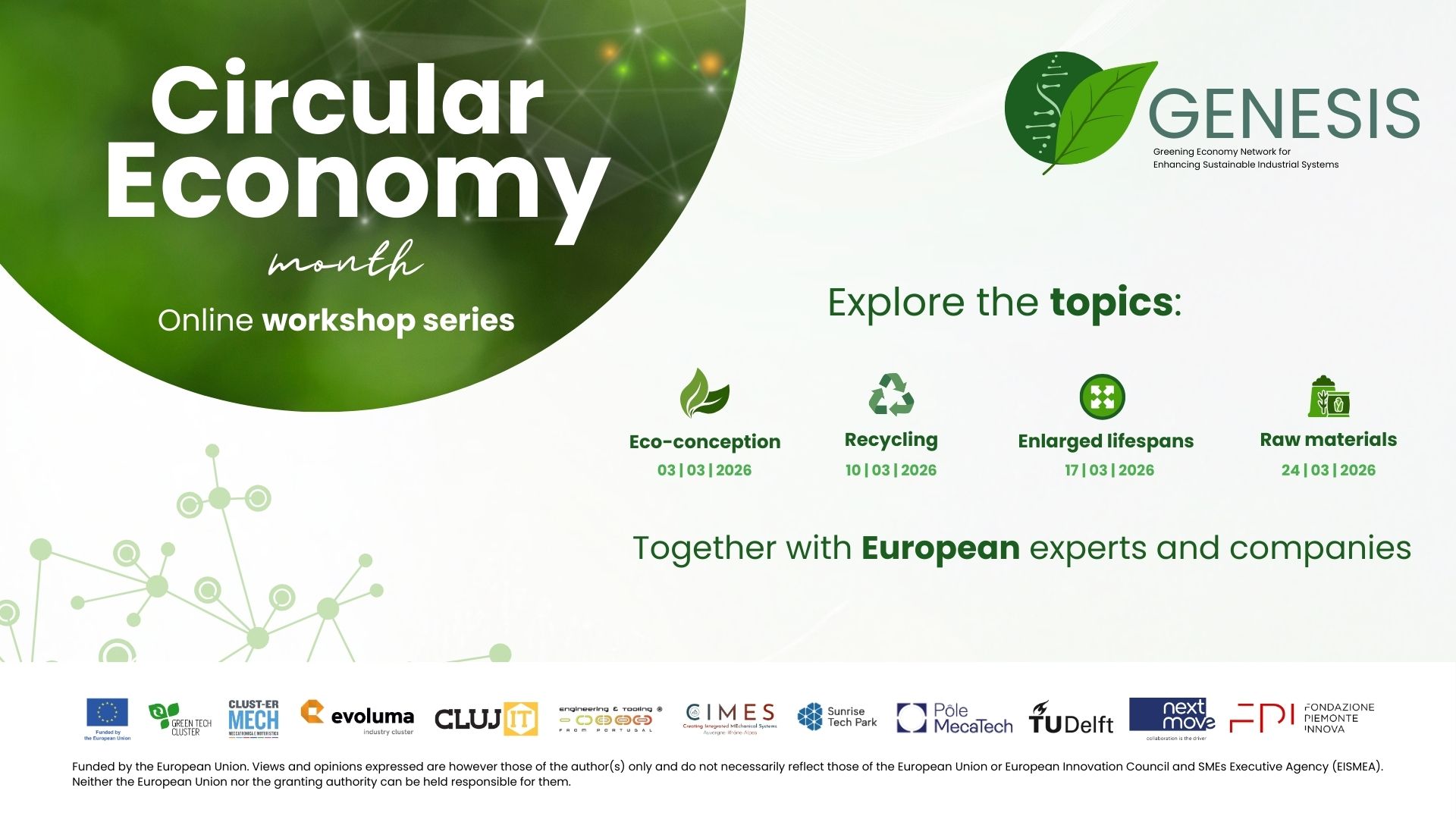
Thematic Focus, Dates & Scope

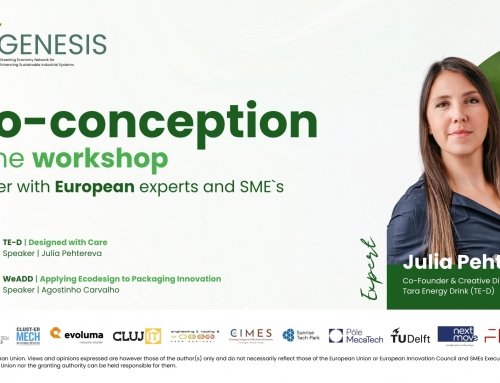
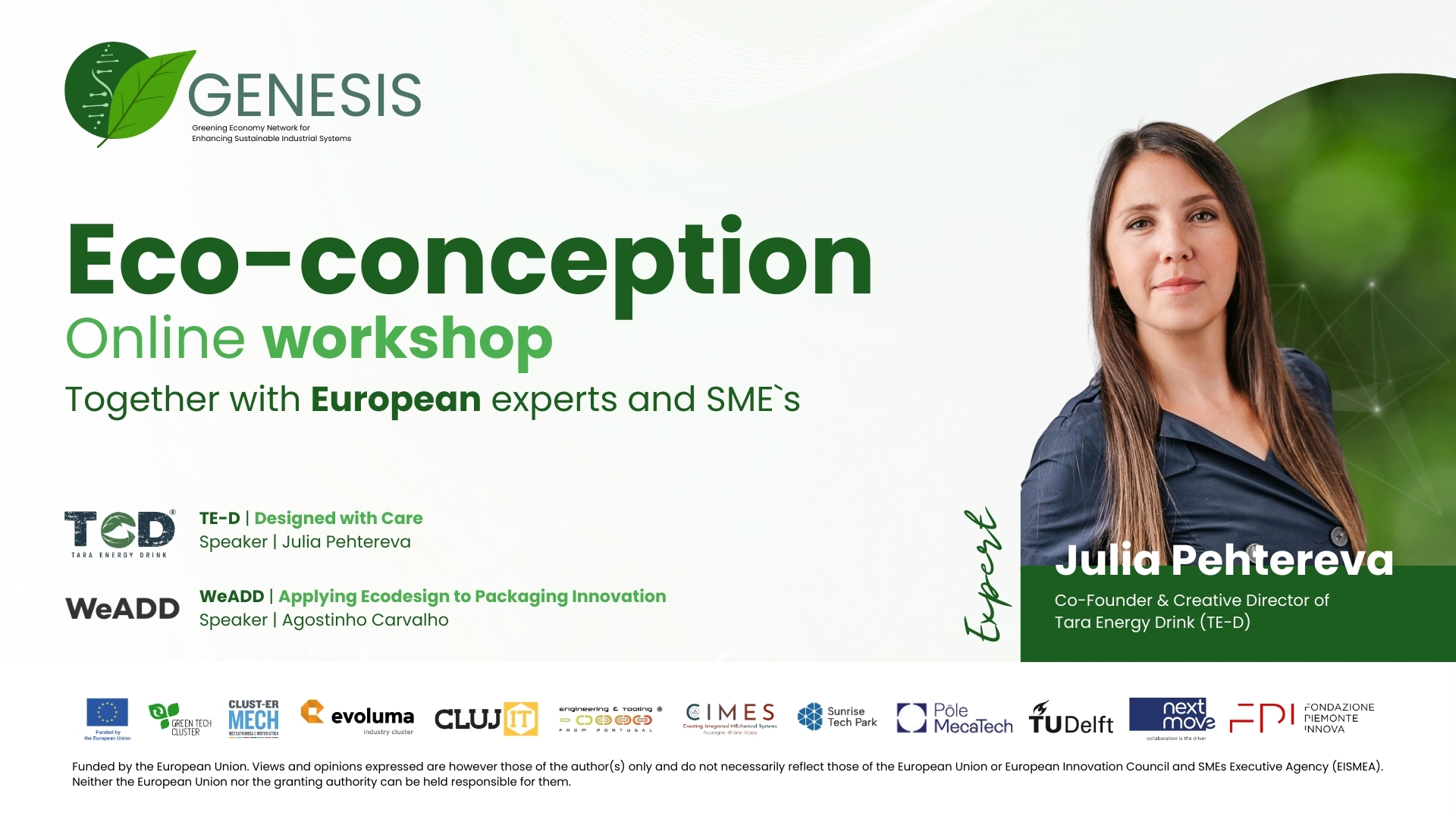
Eco-conception
03/03/2026
10:30–12:00 (CET)
This session will explore how design choices can reduce environmental impacts across the entire product lifecycle, from material selection to end-of-life strategies.
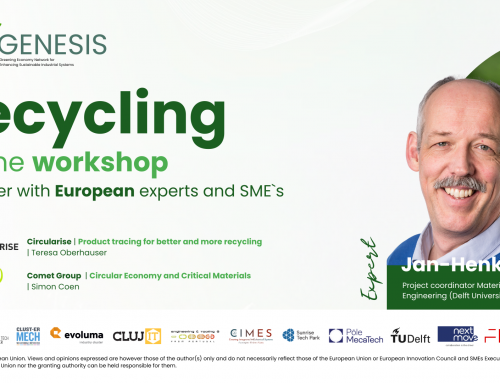
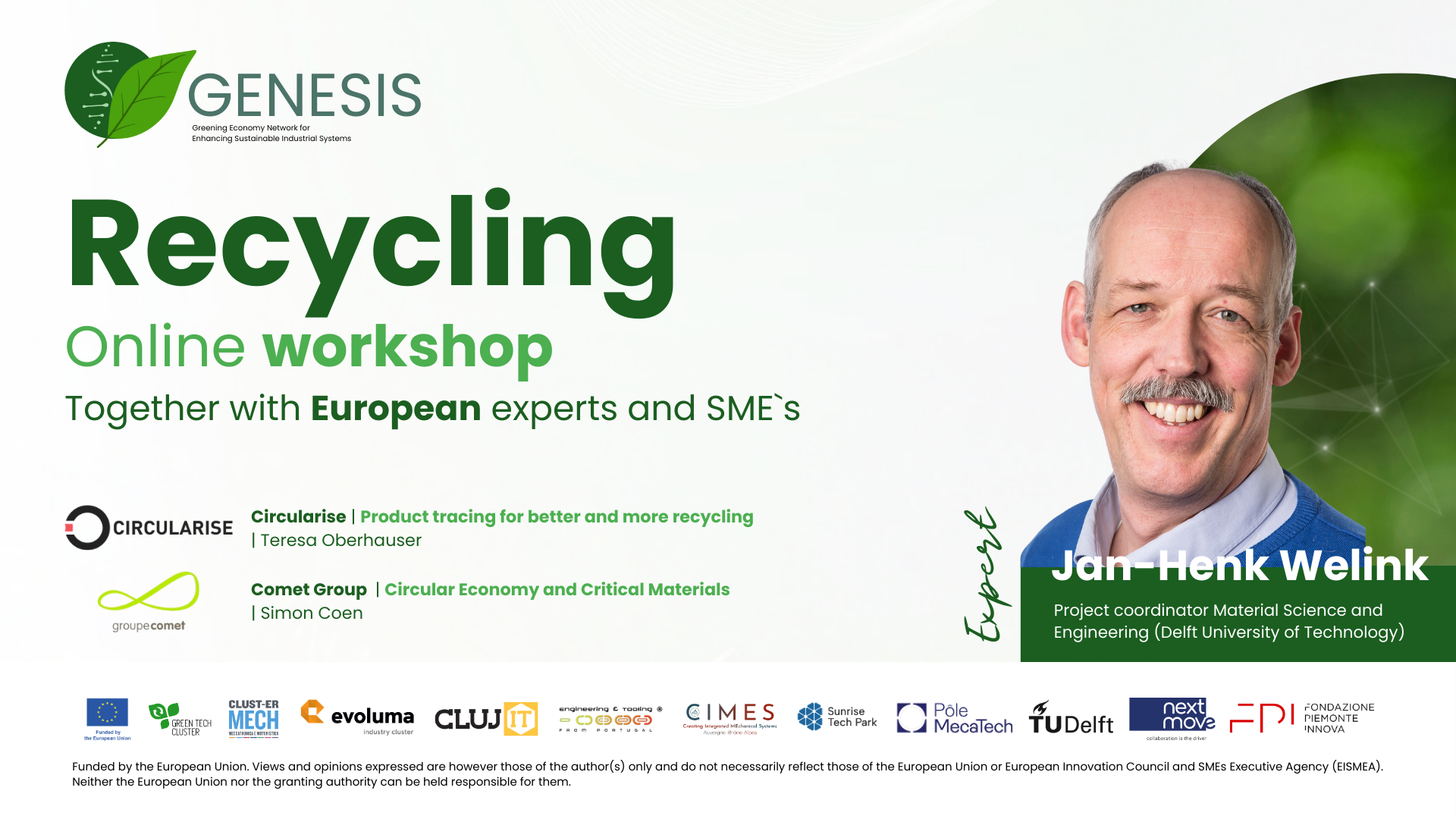
Recycling systems & technologies
10/03/2026
10:30–12:00 (CET)
The workshop will address innovative recycling processes, enabling technologies, and business models that improve material recovery and value retention.
Extending product lifespans
17/03/2026
10:30–12:00 (CET)
This session will focus on approaches such as durability, repair, reuse, and remanufacturing to prolong product life and reduce resource consumption.
Sustainable raw materials
24/03/2026
10:30–12:00 (CET)
Participants will discuss strategies for sourcing, substituting, and managing raw materials to enhance supply resilience and reduce environmental footprints.

About the GENESIS Project
GENESIS (Greening Economy Network for Enhancing Sustainable Industrial Systems) is an EU-funded initiative supporting regions and innovation actors in adopting circular and sustainable industrial models. The project focuses on capacity building, knowledge exchange, and matchmaking between complementary ecosystems, helping ideas move closer to implementation.
During EU Circularity Month, GENESIS will host a thematic webinar series designed not only to inform, but to actively involve participants in discussion and co-creation.
What to Expect from the Webinar Series
- Four thematic online workshops covering key circular economy topics
- Hands-on, interactive formats, including collaborative digital tools
- Real-life SME use cases from different European regions
- Opportunities to connect with like-minded stakeholders and explore future collaboration
While the detailed agendas and speakers for each workshop will be announced separately, each session will combine:
- A short introduction to the GENESIS framework
- A focused thematic input
- Practical company examples – case studies
- A guided interactive workshop with participants
Who Should Join?
The series is open to all EU stakeholders, including:
- SMEs and industry representatives
- Research and innovation organisations
- Business support organisations and clusters
- Public authorities and policy makers
- Sustainability, circular economy, and ecosystem builders
From Knowledge to Collaboration
Beyond raising awareness, a key ambition of the series is to identify synergies between regions and actors. Selected participants may be invited to follow-up matchmaking activities, supporting the development of future European project ideas and partnerships.

One registration grants access to all four sessions
We look forward to your participation and valuable contributions!
#I3Instrument #GENESISproject #CircularEconomy #GreenEconomy #SustainableManufacturing #ResourceEfficiency #EUinnovation #EUFunds #GreenDeal
Funded by the European Union. Views and opinions expressed are however those of the author(s) only and do not necessarily reflect those of the European Union or the European Innovation Council and SMEs Executive Agency (EISMEA). Neither the European Union nor the granting authority can be held responsible for them